Acupuncture
Acupuncture is the best-known treatment in Traditional Chinese Medicine. It is used as a complementary approach for a range of complaints, most often pain — results vary from person to person, and it is not a cure.
What it is
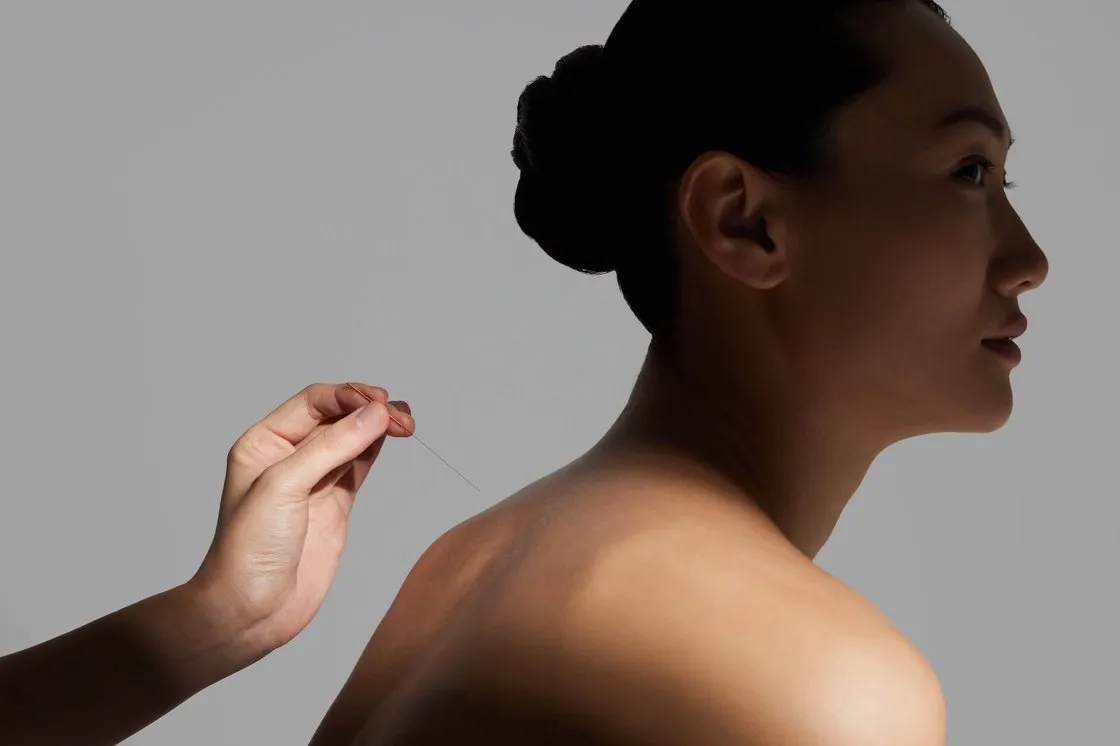
Acupuncture involves placing very fine, sterile single-use needles at specific points on the body. It is one of the more researched complementary therapies, and in Switzerland it is widely covered through supplementary insurance when delivered by EMR-/ASCA-recognised practitioners.
A typical course is a series of short sessions rather than a single visit. We use it as a complement to — not a replacement for — exercise, medication and the medical care you need, and we are honest that how much it helps differs from person to person.
What to expect in a session
Your first appointment starts with a thorough conversation about your symptoms and history. The practitioner then places around 8 to 20 thin needles; most people feel only a small prick or a dull, heavy sensation rather than pain.
The needles usually stay in for 20 to 30 minutes while you rest. Many people find this part relaxing. Tell your practitioner if anything feels sharp and they will adjust.
What it is typically used for
People most often try acupuncture for musculoskeletal pain such as back and neck pain, for migraine and tension headaches, and as supportive care for sleep, stress and fertility journeys. The evidence is stronger in some of these areas than others.
What the evidence says
Acupuncture is among the better-studied complementary therapies. Reviews are most encouraging for chronic pain and for reducing the frequency of migraine and tension-type headache; for many other uses the evidence is weaker or mixed, and part of the effect may be non-specific. We treat it as a reasonable option to try, not a guaranteed fix.
We base this on general clinical guidelines and systematic reviews (e.g. Cochrane, PubMed-indexed research). The honest summary: studies vary in quality and findings, and individual results differ. We use Acupuncture as a complement, not a substitute for medical assessment.
Conditions it commonly supports
People often try Acupuncture as part of a wider approach for:
FAQ
Does acupuncture hurt?
The needles are very fine and most people feel only a small prick or a dull, heavy ache as they go in. It is usually far more comfortable than people expect. Sharp or lasting pain is not normal — tell your practitioner and they will adjust or reposition the needle.
How many sessions will I need?
There is no fixed number. Many people start with a short course of about six to ten sessions and we reassess whether it is helping. If you notice no change after several treatments, we will say so honestly rather than keep going indefinitely.
Is acupuncture safe?
When performed by a trained practitioner with sterile single-use needles, serious side effects are rare. Minor bruising or brief light-headedness can happen. Tell us if you are pregnant, take blood thinners, or have a bleeding disorder so we can adapt the treatment.
Is this covered by my insurance?
Treatment by our EMR-/ASCA-recognised practitioners is typically reimbursed through Swiss supplementary insurance for complementary medicine, not basic insurance. How much you get back depends on your individual policy. Our insurance guide explains the basic-versus-supplementary split in plain English.
This page is general information, not medical advice, and does not promise any cure or specific outcome. If symptoms are severe, sudden or worsening, see a doctor.
Related therapies
Electroacupuncture
Acupuncture with a gentle electric pulse added to the needles, often used for chronic pain.
Cupping
Suction cups to ease tight muscles and improve local circulation — often combined with acupuncture.
Tuina Massage
A firm, medical-style Chinese massage for muscular tension and stiffness.